Architectural visualization best practices for federal success
Architectural visualization best practices for federal success

TL;DR:
- Effective federal visualization is essential for procurement, requiring transparency, auditability, and compliance integration. Best practices include realistic lighting, precise materials, deliberate composition, contextual embedding, accurate scaling, restrained post-processing, and storytelling to support stakeholder trust. Leveraging BIM workflows and real-time tools accelerates decision-making and ensures compliance, while detailed briefs and audit-ready reporting minimize revisions and strengthen proposals.
Federal contracting officers and supplier diversity managers operate in a space where architectural visualization best practices are not optional polish. They are procurement infrastructure. A visualization that fails to support audit trails, diversity reporting, or stakeholder transparency can derail a bid or expose compliance gaps. As architectural images are never neutral and must be chosen based on the intended stakeholder audience, the stakes of choosing the wrong approach are real. This article gives you a structured framework to evaluate, select, and manage visualization solutions that serve both design excellence and federal compliance.
Table of Contents
Key Takeaways
| Point |
Details |
| Seven key elements |
Focus on lighting, materials, composition, context, scale, post-processing, and storytelling for compelling visualization. |
| BIM-driven workflows |
Use BIM models directly for accurate, consistent renders and faster design updates supporting compliance. |
| Real-time visualization |
Adopt real-time rendering to cut revision rounds and accelerate federal procurement decisions. |
| Detailed provider briefs |
Clear briefs with project specifics and input quality reduce revisions and enhance audit readiness. |
| Compliance focus |
Embed verifiable data and transparency to meet audit and supplier diversity program requirements. |
Criteria for evaluating architectural visualization best practices
Before comparing tools or workflows, you need a clear scorecard. Federal procurement contexts demand more than beautiful renders. They demand defensible, auditable outputs that hold up in review.
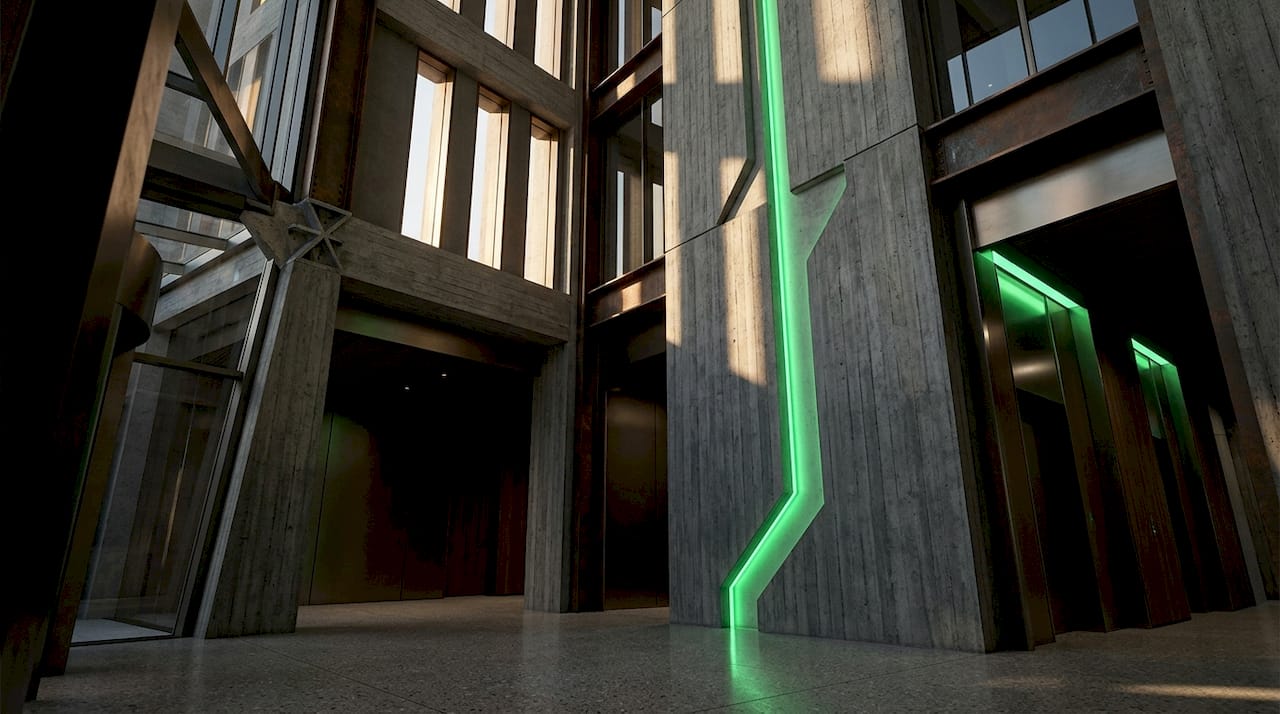
Start with transparency. Every visualization decision, from material selection to lighting logic, should be traceable back to a documented methodology. Transparency and audit readiness are critical criteria in supplier diversity program reporting, and the same principle applies to visualization deliverables used in procurement documentation.
Consider these criteria when evaluating any visualization approach:
- Reporting integrity: Can the visual output be tied to verified model data?
- Iteration speed: Does the workflow support fast revisions without sacrificing quality?
- BIM fidelity: Is there a single source of truth connecting design models to rendered outputs?
- Compliance scoring: Are supplier diversity and code compliance data embedded and auditable?
- Stakeholder clarity: Do non-technical reviewers understand what they are seeing?
Quality also depends on materials, lighting accuracy, and true-to-scale proportions. These are not aesthetic preferences. They are signals of a provider’s technical rigor, and they directly affect stakeholder confidence during federal reviews. Integrating a solid compliance and risk framework into your visualization procurement process is the clearest path to defensible decisions.
Seven foundational best practices in architectural visualization
Seven key elements define quality architectural renders: lighting, materials, composition, context, scale, post-processing, and storytelling. Each one affects how a federal stakeholder reads and trusts what they see. Here is how to apply them.
- Prioritize realistic lighting. Natural shadows cast at specific times of day reveal depth and spatial relationships. Federal reviewers evaluating site conditions need accurate sun angles, not generic ambient light.
- Use physically based materials. High-fidelity textures with subtle imperfections read as credible. Perfectly uniform surfaces signal shortcuts that undermine trust.
- Compose shots deliberately. Eye-level perspectives match how humans experience a space. Bird’s-eye views can obscure scale and mislead non-technical decision makers.
- Embed environmental context. Surrounding landscape, street infrastructure, and neighboring buildings matter for federal site assessments. Generic backgrounds reduce the usefulness of the visual.
- Maintain accurate scale. Human figures, furniture, and door heights calibrated to anthropometric standards give reviewers intuitive spatial understanding.
- Post-process with restraint. Color grading and contrast adjustments should enhance clarity, not mask modeling weaknesses or exaggerate performance claims.
- Tell a visual story. A sequence of images that shows approach, entry, and interior use communicates design intent better than a single beauty shot.
These practices are not theoretical. They translate directly into fewer revision rounds, stronger stakeholder presentations, and visualization outputs that hold up under procurement scrutiny. For ongoing federal visualization insights, the body of published research on what works in agency contexts continues to grow.
Pro Tip: Always request a sample render early in any provider engagement. Review it against all seven criteria before committing to a full visualization package.
Leveraging BIM and Revit workflows for consistency and compliance
Workflow matters as much as output quality. In federal contexts, the path from design model to final render must be traceable, repeatable, and internally consistent.
BIM models as a single source of truth improve geometry accuracy, material quality, and coordination across stakeholders. When you render directly from a BIM model, you eliminate the risk of geometry drift that happens when teams build separate visualization models from scratch.
Revit rendering requires proper material appearance assets and a calibrated sun path camera setup to produce believable outputs. Setting geographic location correctly and scheduling renders at 10 AM and 3 PM captures the shadow conditions most relevant to site evaluation.
| Factor |
BIM-integrated rendering |
Traditional separate modeling |
| Geometry accuracy |
High, tied to live model |
Variable, dependent on rebuild |
| Material consistency |
Centralized, coordinated |
Duplicated, prone to drift |
| Update speed |
Fast, model drives changes |
Slow, requires manual rebuild |
| Compliance auditability |
Traceable to source data |
Difficult to verify |
| Stakeholder trust |
Higher, single source |
Lower, version confusion |
Key workflow disciplines that protect compliance:
- Maintain model hygiene with consistent Level of Development (LOD) standards
- Purge unused families and materials before rendering exports
- Document sun path settings and material assignments in deliverable logs
Pro Tip: Run a small test export from your BIM model before committing to full rendering. Validate scale, coordinate systems, and material assignments early. Fixing these issues after a full render cycle is expensive and delays procurement timelines.
For teams building submission-grade rendering standards, BIM integration is the foundation, not the finish line.
Real-time visualization to accelerate federal procurement decisions
Speed matters in federal procurement. Revision fatigue is real, and every additional round of changes adds cost and delays consensus. Real-time visualization tools change that equation.
Real-time visualization reduced concept delivery from roughly one month for one concept to three weeks for three concepts, and cut revisions from six or seven rounds down to one or two. That compression is not a convenience. It is a procurement advantage.
Real-time tools support federal contexts in specific ways:
- Immediate option testing: Stakeholders can see design changes in the room, reducing the back-and-forth of asynchronous email review
- Animated walkthroughs: Non-technical decision makers understand spatial experience through movement, not static images
- Transparent collaboration: When everyone sees the same model in real time, alignment is faster and disagreements are resolved on facts
“Before we used real-time visualization, clients would approve something they didn’t fully understand, then push back during construction. Now, non-architects make confident procurement decisions in the first meeting.” — Founder, Marstudyo
The ability to test efficient 3D design review processes in live sessions has measurable impact on how quickly federal teams reach consensus. For contracting officers managing tight award timelines, that speed is a competitive differentiator. See how AI transforms architecture bids when real-time visualization is paired with diagnostic intelligence.
Best practices for ordering and managing visualization services in federal contexts
Even the best visualization platform produces poor results when the brief is vague. Federal contracting officers have an advantage here: you are trained to write detailed specifications. Apply that same discipline to visualization procurement.
- Write a complete provider brief covering project scope, scale, technical format requirements, and diversity/compliance reporting expectations.
- Supply high-quality floor plans at 600x800 pixels or higher. Low-resolution inputs produce import errors that cost time and money.
- Require multi-pass render outputs including beauty, reflection, and Z-depth passes. These allow targeted revisions without full re-renders.
- Set clear review checkpoints at concept approval, materials approval, and final delivery. Each checkpoint should include documented sign-off.
- Establish a single communication channel for feedback. Scattered emails and informal messages create version confusion that undermines compliance documentation.
Detailed provider briefs covering project scope, scale, deliverable formats, and input quality drastically reduce revisions and accelerate workflows. And multi-pass outputs enable surgical revisions without full re-rendering, which is critical during compliance review cycles where timing is non-negotiable.
| Deliverable standard |
Compliance-ready provider |
Typical general provider |
| Multi-pass render outputs |
Included by default |
Often not offered |
| Audit trail documentation |
Provided with delivery |
Rarely documented |
| Diverse spend certification |
Verifiable, Tier 1 credit |
Unavailable |
| Revision management |
Structured, documented |
Ad hoc |
| Federal format compatibility |
Built into workflow |
Requires custom request |
Pro Tip: Prioritize providers who demonstrate audit-ready reporting and transparent methodology. In supplier diversity reviews, a provider who cannot document their process creates liability, not value.
For a closer look at how these standards apply to specific federal submissions, the architectural compliance checks framework provides actionable guidance.
Comparative analysis of architectural visualization methods for federal contracting
Three primary approaches dominate federal visualization contexts. Each has a different profile of strengths and trade-offs.
| Criterion |
BIM-driven rendering |
Real-time visualization |
Traditional static renders |
| Compliance auditability |
High |
Medium |
Low |
| Visual fidelity |
High |
Medium to high |
High |
| Iteration speed |
Medium |
High |
Low |
| Infrastructure cost |
Medium |
Medium to high |
Low |
| Supplier diversity reporting |
Varies by provider |
Varies by provider |
Rarely available |
| Stakeholder engagement |
Medium |
High |
Low to medium |
Key considerations for federal contexts:
- BIM rendering consistency requires strong model hygiene but delivers the most defensible outputs for compliance review
- Real-time tools significantly reduce revision rounds and are particularly effective when federal stakeholders include non-technical decision makers
- Traditional static renders work for single-use presentations but fail in environments requiring iterative, audit-ready review cycles
- Hybrid approaches combining BIM accuracy with real-time review sessions offer strong results on complex federal projects with multiple review authorities
The right method depends on project scale, compliance complexity, and the technical sophistication of your review stakeholders. For projects where both design quality and supplier diversity credit matter, the approach that delivers submission-grade architectural intelligence is the one worth investing in.
What most procurement guides get wrong about visualization
Here is the uncomfortable reality: most federal procurement guidance treats visualization as a deliverable category rather than a decision support system. That framing produces the wrong questions. Teams ask “how much does it cost?” before asking “what does this output need to prove?”
In our experience working across federal A&E pursuits, the visualization failures that create the most damage are not low-resolution renders or outdated software. They are outputs that cannot be connected back to verified model data, that were produced by providers who left no audit trail, and that offered no pathway to supplier diversity credit. The design looked fine. The procurement record was indefensible.
The providers who understand federal context do not just produce beautiful images. They embed compliance logic into their workflow, document every material and lighting decision, and structure deliverables to survive a post-award review. That is a different service category than architectural rendering. It is architectural diagnostic intelligence. And the contracting officers who recognize that distinction earlier in the procurement cycle consistently build stronger proposals and cleaner compliance records.
How Modish Global Inc. delivers federal-grade visualization
Modish Global Inc. is the only Disability:IN-certified DOBE architectural diagnostic intelligence firm in the United States. That designation is not a checkbox. It means every Modish engagement counts as Tier 1 diverse spend credit while delivering a capability no other firm in any corporate supplier database can match.
The Cinematic Intelligence platform identifies structural, environmental, and code compliance failure points before construction commits, then renders 192 corrective visualization options per upload in federal submission-grade quality. Modish is SAM.gov registered, teamed under READIGOV (SDVOSB/WOSB prime) and Green America for complete federal A&E execution, and priced from $9,500 single-facility pilots to $150,000+ annual enterprise licenses. For contracting officers and supplier diversity managers who need both the compliance record and the design intelligence, there is no comparable source.
Frequently asked questions
What are the most important criteria for architectural visualization in federal procurement?
Transparency, audit readiness, real-time decision support, and adherence to supplier diversity reporting standards are key. Verifiable reporting is essential for defensible procurement decisions in supplier diversity programs.
Why is direct BIM rendering preferred over rebuilding geometry for visualization?
Direct BIM rendering ensures consistency with the design model, reduces errors, and speeds updates. BIM as a single source of coordinated truth reduces inconsistencies and improves render quality across stakeholder reviews.
How does real-time visualization benefit federal procurement cycles?
Real-time visualization reduces revision rounds and accelerates stakeholder alignment significantly. Projects using real-time tools dropped revisions from six or seven rounds to as few as one or two.
Prepare a detailed brief with clear project scope, high-resolution floor plans, context photos, and material specifications. Detailed briefs covering scope and input assets are the single most effective way to reduce workflow friction and protect compliance timelines.
Recommended